How Founders Can Raise Capital with SPVs and RUVs
Learn how founders can raise capital using SPVs and Roll Up Vehicles (RUVs), including costs, control, and cap table impact.
Request an AI summary of this page
Option 1
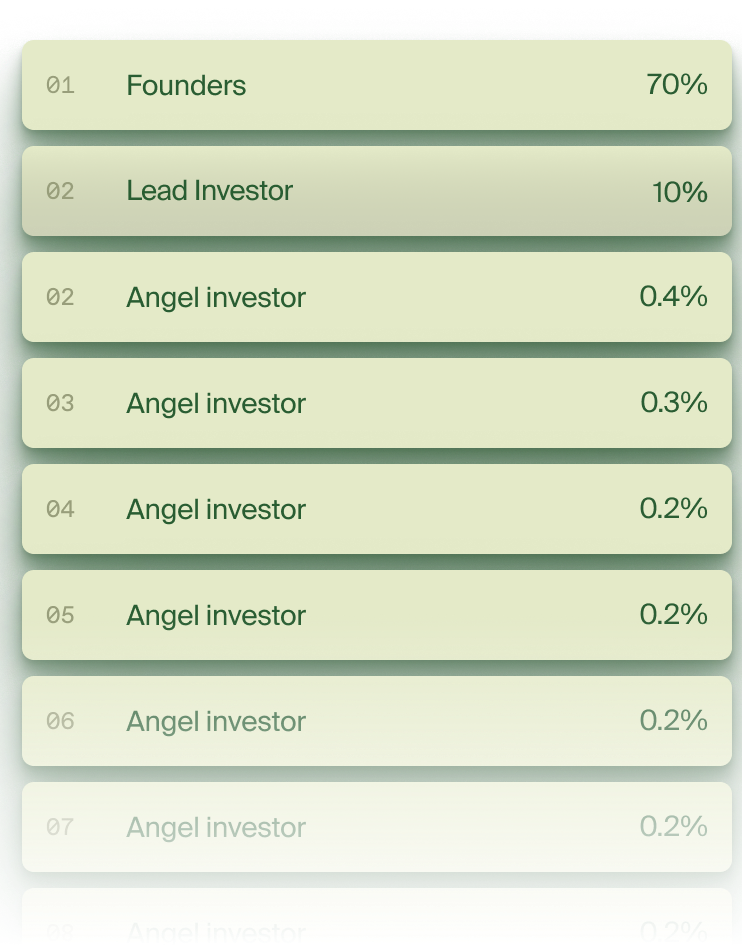
Sign SAFEs/equity docs with every investor individually.
Founders sign SAFEs or equity documents with every investor individually, adding each one to their cap table. This seems simple at first, but managing dozens or hundreds of individual investors becomes a constant administrative burden that slows down the company.
Over time, a messy cap table with many small investors makes future fundraising more difficult. VCs often hesitate when they see a cluttered cap table, and legal and accounting fees add up with each additional investor.
Annoying to manage and keep up with
Adds admin costs and slows down your company
Creates a messy cap table, which might make future VCs hesitate to invest.
Option 2
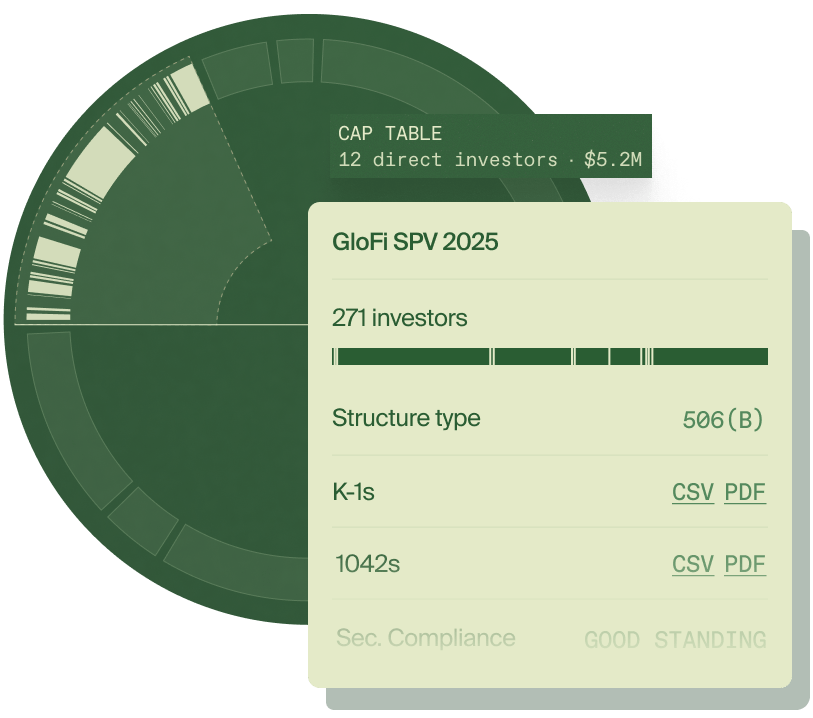
Get a VC to run a SPV into your company
Founders ask a VC to run an SPV to pool their investors. This works, but most SPVs take their admin fees out of the capital raised - so the founder's investors are paying. The founder is also asking the GP to do this as a favor without giving them carry.
Some SPV admins place the founder in the GP role as a workaround, creating a conflict of interest where the founder must represent both the company and investors. This exposes the founder to risk.
Works to pool investors effectively
But your investors are paying, and the VC isn't making any carry.
And SPVs with founders as the GP are risky, as they must represent both the company and the investors in the SPV.
Option 3
Get the benefits of an SPV, but built for founders
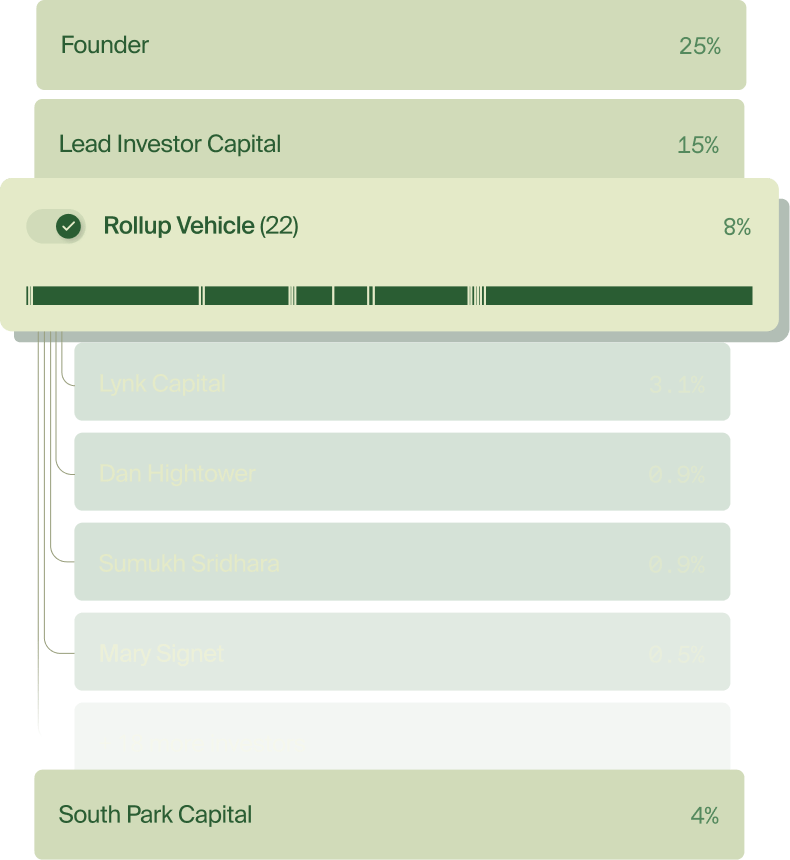
RUVs give founders the benefits of an SPV - pooling investors into a single entity - but without needing a VC. Founders can lead their own RUV directly, and unlike traditional SPVs, RUVs are free for investors with no admin fees or carry taken out of the capital raised.
The founder can lead the RUV without conflicts of interest thanks to a built-in Advisor structure. This Advisor represents the investors' interests, allowing the founder to focus on the company while avoiding the legal and financial risks that come with being a GP in a traditional SPV.
Pool investors, avoid the mess.
Lead your own vehicle, don't worry about talking a GP into doing it for free.
Avoid charging your investors fees/carry, while also protecting yourself from risks with RUV's built-in Advisor
How they compare
A side-by-side look at the key differences between each fundraising approach.
Pooled investors / streamlined cap table
Investor costs
Can founder run it themselves?
Company costs
Professional administration/tax
Investor voting
Exit management
No Vehicle
$0
SAFEs free upfront, costs compound later
Investor decides for themselves
Self-managed
RUVs
$0
Free to raise, one-time flat fee paid by company at close
Company can handle routine votes. Professional management by Rollups & AngelList when there are potential conflicts.
Professionally managed
SPVs
Pay SPV fees and/or carry
Paid by the SPV GP out of investor capital
SPV VC decides on behalf of investors. Founder can be conflicted if they are the SPV Manager.
Professionally managed
The difference is a clean cap table
RUVs consolidate all angel checks into a single, founder-friendly line item - so you can raise faster today and keep your cap table tight for tomorrow’s rounds.
Without RUV
Your cap table with 15 angel investors
With RUV
Clean and simple, ready to scale
RUVs power some of the fastest growing startups.
$1.5B+
Raised through RUVs
3,000+
Startups trust RUVs
Trusted by founders of





Cost comparison
This model calculates the lifetime cost difference between a Roll Up Vehicle and direct investments. You can edit key assumptions & variables below
Advanced settings
Adjust the parameters for this calculation
Typical SAFE or note round assumptions with higher legal touch points.
Direct investRUVSavings
Total costs
Seed round (SAFE/Notes)
Direct invest$110,200
RUV$9,900
Savings$100,300
Initial closing docs
Drafting docs & reconciling signatures per investor.
Direct invest$15,950
RUV$275
Savings$15,675
Lifetime cap table costs
Annual shareholder management fees for each investor until exit.
Direct invest$46,400
RUV$800
Savings$45,600
Additional rounds, legal & admin costs
Cap table updates across future raises.
Direct invest$15,950
RUV$275
Savings$15,675
Shareholder consent costs
Collecting signatures every time consents are needed (including exits).
Direct invest$25,520
RUV$440
Savings$25,080
Instrument conversion
SAFE/note conversions.
Direct invest$6,380
RUV$110
Savings$6,270
RUV Admin costs
Standard RUVs for US C-Corps start at $8k (due at closing).
Direct invest$0
RUV$8,000
Savings-$8,000
† Based on Rollups pricing compared with estimated third-party setup and administration costs. Actual costs vary by company, investor count, jurisdiction, and transaction complexity.
"Function Health raised much of its seed and pre-A using an AngelList RUV. I recommend it to every founder."
"The RUVs we ran saved so much time not only during Rollfi's fundraises but also we when got acquired by Priority."
"We used an RUV at Stellate with great success. 11/10 would recommend to all founders raising from individual angels"
Everything You Need to Know
- Roll Up Vehicles (RUVs) are a type of Special Purpose Vehicle (SPV) designed for founders who want to efficiently raise capital from individual operators and angels with a single cap table entry. Traditional SPVs are run by external investors, who are actively involved in the management of the SPV and typically receive performance-based compensation from the vehicle (carried interest). With RUVs, the founder of the portfolio company creates RUVs but is not required to play a formal material role in the RUV.
- Yes, all investors in a Roll Up Vehicle must be accredited. Investors may be based in most jurisdictions as long as they meet US accreditation and KYC requirements. Rollups does not support transactions for persons or entities residing in restricted countries or regions. Contact us for a current list.
- Generally, yes, QSBS eligibility flows through to investors when they invest into your RUV. Contact us for more details.
- RUVs benefit from AngelList's trusted investor accounts and investment experience. When your investors invest into your RUV, they will be using their AngelList accounts, saving them from time spent on KYC, accreditation, and providing bank info.
- RUV customers are private companies that have raised (or are currently raising) venture capital. We support companies incorporated in other countries, subject to certain restrictions.
- Standard RUVs for US C-Corps have a flat $8k setup fee. We also support more complex structures, instruments, and needs, along with dedicated white-glove support from a deal team. Pricing for these cases depends on the setup. To confirm pricing for your RUV, submit your RUV or contact us.
- Rollups builds the known, fixed costs of running an RUV into our pricing, unlike other providers that surprise you with add-on fees once you're on the phone. The RUV will pay certain variable state filing fees based on where your investors are located. This cost will be passed on to you. The typical range for these fees is between $750-$1,250, but exact numbers will vary.
- By default, regulatory requirements prevent you from publicly marketing your RUV. Contact us to discuss other options that may be available.
- Roll Up Vehicles are private. Neither AngelList nor Rollups shares your RUV with investors. The only way for someone to view or invest in a RUV is through the invite link managed by the company.